By Amit Kumar Sharma, Professor of Sociology, Jawaharlal Nehru University, New Delhi
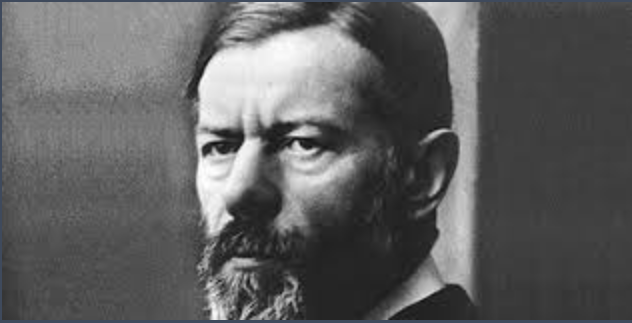
Max Weber’s Selective Memory: War, Colonial Corruption and the Missing Foundations of European Modernity
Max Weber’s greatness must now be judged together with his silences. He was certainly a thinker of astonishing flashes, a jurist of rational domination, a diagnostician of bureaucracy, and a tragic interpreter of modern disenchantment; but he was not the innocent sage of universal sociology. He was also a German political intellectual formed within the ruling-class anxieties of imperial Germany, engaged in wartime and postwar politics, invited into the Weimar constitutional discussions and the Versailles delegation, and therefore not a scholar living in ignorance of war, diplomacy, military power, or statecraft. Contemporary summaries of Weber’s political life confirm that after 1918 he was invited to join both the Weimar constitutional drafting process and the German delegation to Versailles, though his practical political influence remained limited.
This fact changes the final evaluation. Weber could not have been unaware that European modernity was made not only by Protestant vocation, legal rationality, bureaucracy, and disciplined capitalism, but also by military technology, war strategy, colonial violence, naval power, state corruption, chartered companies, forced taxation, slavery, plantation economies, and imperial plunder. Durkheim, unlike Weber, directly entered the war question through Who Wanted War?, published in 1915 with Ernest Denis, a work explicitly concerned with the diplomatic origins of the First World War. Weber’s relative silence on comparable questions is therefore not a small omission. It is structural.
From the Scottish Enlightenment onward, European public debate knew that war, commerce, empire, finance and state power were intertwined. By the time of Napoleon, military innovation, mass conscription, artillery, logistics, administrative centralization and strategic mobility had already remade Europe. By the time of British empire in India, the corruption trials of Robert Clive and Warren Hastings had publicly exposed the moral economy of colonial capitalism. Clive was not an accidental rogue outside capitalism; he was one of the violent founders of the imperial-commercial order that later allowed Europe to speak the language of rationality while living from conquest. Hastings was not a private aberration; his impeachment revealed that colonial governance itself had become a field of legal fiction, extraction, patronage, and imperial moral theatre. Weber’s sociology of capitalism, if genuinely global, should have placed Clive, Hastings, the East India Company, colonial law, military finance, and imperial corruption beside Calvin, Luther, the Puritan vocation, and rational bookkeeping.
This is the decisive contradiction. Weber discovered the “spirit” of capitalism in Protestant inner-worldly asceticism, but he did not sufficiently investigate the “body” of capitalism in armies, navies, plantations, colonial courts, trading companies, opium regimes, revenue settlements, military contractors, and imperial corruption. His Protestant ascetic may be disciplined, sober, calculating and this-worldly; but Robert Clive was also this-worldly, calculating, disciplined in conquest, and rational in plunder. If Weber could identify religious discipline behind capitalist rationality, why did he not equally identify military predation, colonial fraud, and imperial state violence behind European accumulation?
The answer is not that Weber was ignorant. The more serious answer is that Weber’s conceptual architecture made war and colonial violence secondary to rationalization, legality and religion. He saw domination, but he did not sufficiently make colonial domination foundational to capitalism. He saw bureaucracy, but not colonial bureaucracy as one of the laboratories of modern rationality. He saw law, but not imperial law as organized theft disguised as legality. He saw Protestant vocation, but not the colonial official, military entrepreneur, company agent and imperial jurist as equally central figures of capitalist modernity.
This silence becomes more troubling because Weber was not a pacifist like Tolstoy, Ruskin, or George Bernard Shaw. Nor was he a purely academic recluse. He was a political man, a nationalist liberal, a wartime commentator, a critic of Versailles, an advocate of strong leadership, and a participant in the German postwar constitutional atmosphere. Therefore, his underdeveloped sociology of war cannot be excused as scholarly innocence. It reflects selective vision.
The revised final judgment must therefore be sharp but fair. Weber remains indispensable for understanding rationalization, bureaucracy, legal domination, vocation and disenchantment. But his sociology of capitalism is incomplete because it underestimates war, colonialism and military-fiscal power. His sociology of religion is incomplete because it over-privileges Protestant ascetic discipline while under-examining imperial greed, colonial corruption and violent extraction. His sociology of law is incomplete because it does not fully confront how European law rationalized conquest. His sociology of modernity is incomplete because it treats Europe too often as if Europe became modern from within, rather than through the violent remaking of the Americas, Africa and Asia.
The final sentence of the Weber volume should therefore be uncompromising:
Weber saw the iron cage, but he did not fully show us the battlefield, the plantation, the colonial court, the company ledger, the opium warehouse, and the corrupt imperial office from which much of that iron had been forged.
Reference footnotes with global Bibliography
Reference Footnotes
[1] Max Weber, Economy and Society, trans. Keith Tribe (Cambridge, MA: Harvard University Press, 2019), pp. 973–1110.
[2] Max Weber, The Protestant Ethic and the Spirit of Capitalism (London: Allen & Unwin, 1930), pp. 39–183.
[3] Émile Durkheim and Ernest Denis, Who Wanted War? The Origin of the War According to Diplomatic Documents (Paris: Armand Colin, 1915), pp. 1–47.
[4] Wolfgang Mommsen, Max Weber and German Politics, 1890–1920 (Chicago: University of Chicago Press, 1984), pp. 251–319.
[5] Thomas Nipperdey, Germany from Napoleon to Bismarck (Princeton: Princeton University Press, 1996), pp. 413–587.
[6] Anna Plassart, The Scottish Enlightenment and the French Revolution (Cambridge: Cambridge University Press, 2015), pp. 1–58.
[7] John Brewer, The Sinews of Power (Cambridge, MA: Harvard University Press, 1989), pp. 15–113.
[8] Michael Mann, The Sources of Social Power, Vol. II (Cambridge: Cambridge University Press, 1993), pp. 1–214.
[9] Charles Tilly, Coercion, Capital, and European States (Oxford: Blackwell, 1990), pp. 67–140.
[10] Fernand Braudel, Civilization and Capitalism, Vol. II (New York: Harper & Row, 1982), pp. 227–563.
[11] Andre Gunder Frank, ReOrient (Berkeley: University of California Press, 1998), pp. 15–76.
[12] Sven Beckert, Empire of Cotton (New York: Knopf, 2014), pp. 1–39, 89–176.
[13] Karl Polanyi, The Great Transformation (Boston: Beacon Press, 1944), pp. 3–71.
[14] W. E. B. Du Bois, Black Reconstruction in America (New York: Harcourt, Brace, 1935), pp. 3–31.
[15] Edward Said, Orientalism (New York: Vintage, 1979), pp. 31–73.
[16] Ronald Inden, Imagining India (Oxford: Blackwell, 1990), pp. 1–36.
[17] Jack Goody, The Theft of History (Cambridge: Cambridge University Press, 2006), pp. 201–248.
[18] Dipesh Chakrabarty, Provincializing Europe (Princeton: Princeton University Press, 2000), pp. 1–19.
[19] Zygmunt Bauman, Modernity and the Holocaust (Cambridge: Polity Press, 1989), pp. 13–39.
[20] George Mosse, The Nationalization of the Masses (New York: Howard Fertig, 1975), pp. 1–29.
[21] Norbert Elias, The Germans (New York: Columbia University Press, 1996), pp. 3–47.
[22] Fritz Stern, The Politics of Cultural Despair (Berkeley: University of California Press, 1961), pp. 3–41.
[23] Eric Hobsbawm, The Age of Empire, 1875–1914 (New York: Vintage Books, 1989), pp. 1–42.
[24] Shoshana Zuboff, The Age of Surveillance Capitalism (New York: PublicAffairs, 2019), pp. 75–118.
[25] Stanislav Andreski, Social Sciences as Sorcery (London: Deutsch, 1972), pp. 1–27.
Bibliography
- Stanislav Andreski. Social Sciences as Sorcery. London: Deutsch, 1972.
- Hannah Arendt. The Origins of Totalitarianism. New York: Harcourt Brace, 1951.
- Zygmunt Bauman. Modernity and the Holocaust. Cambridge: Polity Press, 1989.
- Sven Beckert. Empire of Cotton. New York: Knopf, 2014.
- John Brewer. The Sinews of Power. Cambridge, MA: Harvard University Press, 1989.
- Fernand Braudel. Civilization and Capitalism. 3 vols. New York: Harper & Row, 1981–1984.
- Dipesh Chakrabarty. Provincializing Europe. Princeton: Princeton University Press, 2000.
- Émile Durkheim and Ernest Denis. Who Wanted War? The Origin of the War According to Diplomatic Documents. Paris: Armand Colin, 1915.
- W. E. B. Du Bois. Black Reconstruction in America. New York: Harcourt, Brace, 1935.
- Norbert Elias. The Germans. New York: Columbia University Press, 1996.
- Andre Gunder Frank. ReOrient. Berkeley: University of California Press, 1998.
- Jack Goody. The Theft of History. Cambridge: Cambridge University Press, 2006.
- Eric Hobsbawm. The Age of Empire, 1875–1914. New York: Vintage Books, 1989.
- Ronald Inden. Imagining India. Oxford: Blackwell, 1990.
- Michael Mann. The Sources of Social Power. Vol. II. Cambridge: Cambridge University Press, 1993.
- George Mosse. The Nationalization of the Masses. New York: Howard Fertig, 1975.
- Wolfgang Mommsen. Max Weber and German Politics, 1890–1920. Chicago: University of Chicago Press, 1984.
- Thomas Nipperdey. Germany from Napoleon to Bismarck. Princeton: Princeton University Press, 1996.
- Anna Plassart. The Scottish Enlightenment and the French Revolution. Cambridge: Cambridge University Press, 2015.
- Karl Polanyi. The Great Transformation. Boston: Beacon Press, 1944.
- Edward Said. Orientalism. New York: Vintage, 1979.
- Fritz Stern. The Politics of Cultural Despair. Berkeley: University of California Press, 1961.
- Charles Tilly. Coercion, Capital, and European States. Oxford: Blackwell, 1990.
- Max Weber. Economy and Society. Cambridge, MA: Harvard University Press, 2019.
- Max Weber. The Protestant Ethic and the Spirit of Capitalism. London: Allen & Unwin, 1930.
- Max Weber. The Vocation Lectures. Indianapolis: Hackett Publishing, 2004.
- Shoshana Zuboff. The Age of Surveillance Capitalism. New York: PublicAffairs, 2019.