The Sociology of Culture and the related Cultural Sociology concern the systematic analysis of culture, usually understood as the ensemble of symbolic codes, used by the members of a society, as it is manifested in the society. For George Simmel, culture is referred to as “the cultivation of individuals through the agency of external forms, which have been objectified in the course of history” (Simmel, 1971, p. xxix). Culture, in the sociological field, is analysed as the ways of thinking and describing, acting and the material objects that together shape a group of people’s way of life. Jeffrey C. Alexander introduced the term cultural sociology, an approach that sees all or most of the social phenomena as inherently cultural at some level. Alexander (1988) argues “To believe in the possibility of cultural sociology is to subscribe to the idea that every action, no matter how instrumental, reflexive, or coerced [compared to] its external environment, is embedded to some extent in a horizon of affect and meaning.”
In terms of analysis, Sociology of Culture often attempts to explain some discretely cultural phenomena as a product of social processes, while Cultural Sociology sees culture as a component of explanations of social phenomena. As opposed to the field of cultural studies, Cultural Sociology does not reduce all human matters to a problem of cultural encoding and decoding. For instance, Pierre Bourdieu’s Cultural Sociology has a clear recognition of the social and the economic as categories, which are interlinked with, but not reducible to, the cultural aspects.
However, the general knowledge of arts, which everyone acquires in the course of their general education, is not enough to utilise culture for the solution of acute social problems. One needs specialised knowledge of the principles behind the functioning of culture and cultural structures as well as an understanding of the way culture relates to the system of social regulation. Hence, Sociology of Culture emerged and it often attempts to explain some discretely cultural phenomena as a product of social processes.
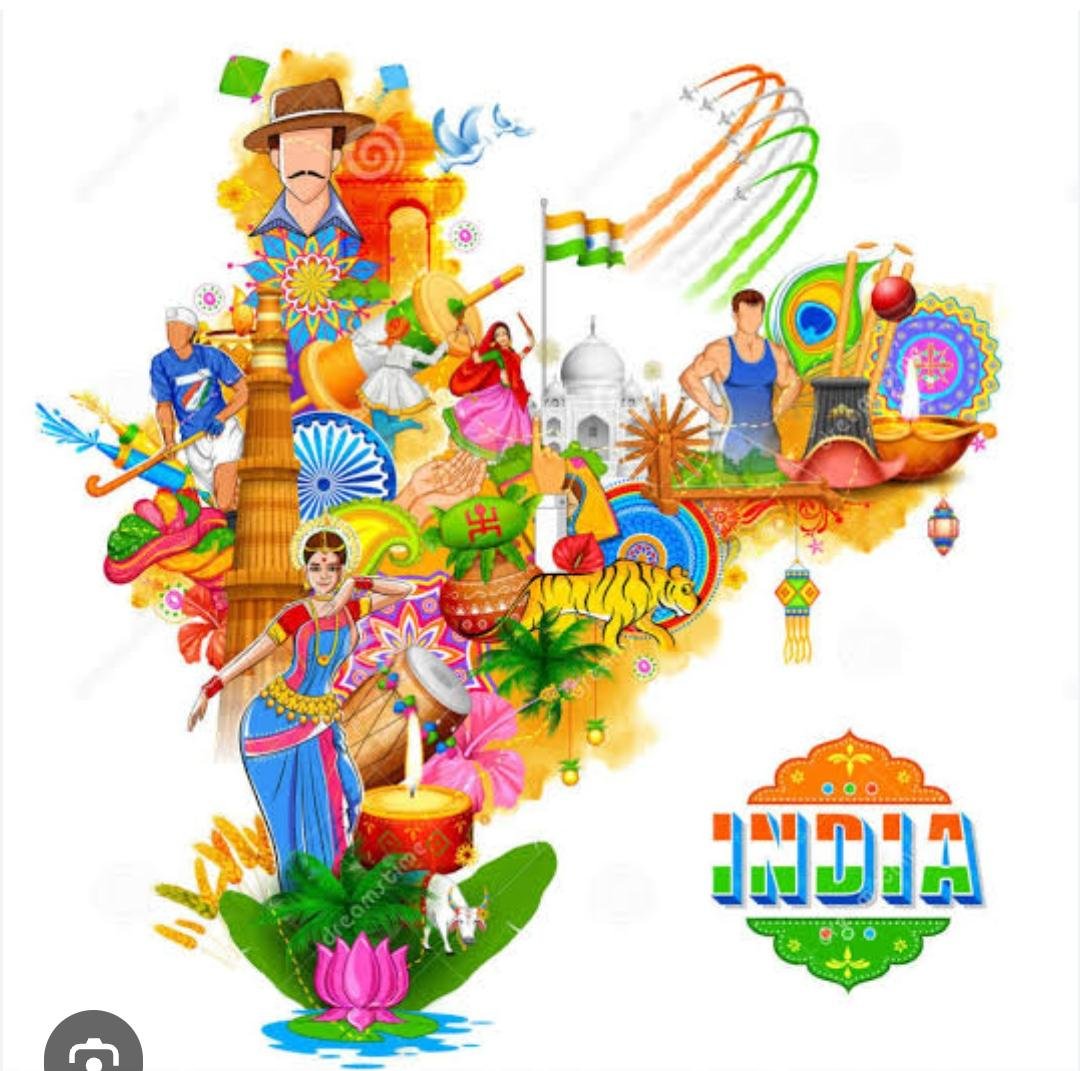
Therefore, the concept of the universality of western culture is unacceptable. Different cultures develop in different concrete social situations, depending upon the nature and condition of the given society. As a result, Asian and African cultural systems became the subject of historical, philosophical and sociological analysis with the restructuring of the approaches of Sociology of Culture. This new approach involved a comprehensive analysis of national and regional cultural variety and the unique features of their historical developments. No wonder! Sociology of Culture in India needs special mention.
The journey of Sociology of India that began with Colonial Anthropology or ‘colonisation’ of the non-Western mind, prepared the ground for our pioneers. Some of whom were involved in the nationalist struggle against the British, to rely on a textual view for offering alternative explanations about its society and culture. The effort to revive and energise traditional culture and establish Indian sociology on its own footing, quite different from that of the Western or colonial categories, led to the popularity of the Indological approach.
But the Indological approach itself did not give rise to any uniform and common explanation about Indian society and culture. The religious texts of different ages that Indologists very often studied not only emanated the idea of a ‘Hindu India’; they also proposed contrasting and conflicting visions of time, space and object. The whole discourse of Indology is eventually interrupted by the theories on post-colonialism and Orientalism.
As a corollary, the need for supplementing those with the field view was also felt by some of our pioneers. Gradually, Indian sociologists have started critically responding to the challenges of studying Indian society, using diverse perspectives, approaches and paradigms. Thus, there was a demand for contextualising Indian sociology by avoiding any ‘methodological fundamentalism’.
One of the founders of Sociology in South Asia, Dhurjati Prasad Mukerji, has emphasised in his works the search for synthesis in both the unfolding of the historical process and the most fruitful way of its study. It was his considered judgement that the most creative way to read history is to focus on the dialectics embedded in it and investigates it from an interdisciplinary perspective, combining history, economics, psychology and sociology. In his opinion, Indian sociologists suffered from the lack of interest in history and philosophy and in the dynamism and meaningfulness in social life. He believed in two things, one, that in discovering the sources and potentialities of social reality in the dialectic of tradition and modernity, and second, that developing an integrated personality through the pursuit of knowledge.
Thus, D.P. Mukerji committed himself to a view of knowledge and of the knower. Knowledge, as he puts it, was not mere matter-of-factness, but ultimately, after taking into account empirical datum and the scientific method for its study, philosophic. Economics had to be rooted in concrete social reality, that is, sociological. Sociology has to take full cognisance of culture, specificity, that is, historical. History had to rise above bygone events with a vision for the future, that is, philosophical. Above all, he stressed the role of reason. According to D.P., the key to understanding Indian society, in terms of tradition, was to understand the relationship of ‘Purusha’ (a holistic, psycho-sociological personality) and society—free of the tension that characterises the relationship of the individual and the group.
His work, while offering an historical outline of the place of culture and cultural analysis in Indian sociology, presents changes in the disciplinary practices in Indian Sociology after the cultural turn. It takes into account the increasing employment of sociological frameworks, perspectives, concepts and methods to further and enhance our understanding of the cultural phenomenon. In substantive terms, it considers themes such as advertising, media, fashion, the shopping malls, credit cards and consumption and the making of the middle classes. It also looks at some of the implications of the growing centrality of cultural sociology for the contemporary understanding of cultural production, identities and lifestyle. It concludes with the argument that culture is no longer being read off social structure, as has been the case till very recently.
India presents one of the more typical examples of the societies of the East because of its long history, socio-cultural variety and overall size. Hence, India contains all of the more typical processes of socio-cultural development. Prof. Y. Singh has provided a broad analysis of the historical aspects of sociology of culture of India as well as the ongoing results of modernisation. He has highlighted the limitation in the sociological studies to study cultural changes as they have studied changes in the social structure and its processes. These cultural changes could be divided into two categories: first, those which concern the substantive structure of culture and its relationship with social institutions; and second, those which refer to the process of change in culture, especially engendered by the forces of globalisation, telecommunication revolution and the emergence of market economy in a qualitatively new form. His works highlight various challenges that cultural change studies face as a result of the emergence of the ‘information society’ and its consequences, leading to the resurgence of the consciousness of identity among ethnic groups, minorities and weaker sections of the society. He also refers to the various facets of the relationship between culture, its patterns and the process of economic and political institution-building in Indian society.
Film has a unique powerful ubiquity within human culture. Cinema has become a powerful vehicle for culture, education, leisure and propaganda. In a 1963 report for the United Nations Educational Scientific and Cultural Organization (UNESCO), looking at Indian Cinema and Culture, the author, Baldoon Dhingra, quoted a speech by Prime Minister Nehru who stated, “…the influence in India of films is greater than newspapers and books combined.” Hence, it is imperative to comprehend the comparative history of the institution of Sociology in Indian universities and the evolution of cinema as a sacred institution in Indic civilisation by understanding the structure, process, and function of both institutions, both synchronically and diachronically.