There are four categories of filmmakers in the Indian film industry. The first three categories of filmmakers display some form of ‘Indianness’, which makes them popular among the audience or at least provides popularity to their films. There has been a considerable diversity at the level of craftsmanship, presentation, genre and storytelling in different films of different filmmakers. The philosophy, outlook and standards (canon) of their films have been forming-deforming as per their personal experiences and feelings. As a result, it would be unfair to put one filmmaker in a single category. However, for the convenience of the study, we can make a classification: –
(a) This category will include the filmmakers who consider film production as a business and films as means of entertainment, available as a product at the ticket window. Himanshu Rai and Shashadhar Mukherjee of Bombay Talkies are the pioneers in establishing this category. Among their masters, are the names like Gyan Mukherjee, Subodh Mukherjee, Nasir Hussain, along with those for whom cinema is basically a means of entertainment or ‘show business’ and, somewhere, they consider themselves to be ‘show man’ or ‘show woman’.
In the academic reviews, such films are called ‘mindless cinema’. These filmmakers, at their own levels, present cinema as a kind of ‘spectacle’. Naive critics of films have arbitrarily referred to a few of them as great ‘show men’ (like, the silly practice of calling Raj Kapoor, Subhash Ghai and Sanjay Leela Bhansali ‘show men’ has almost become a tradition in a particular class). Similarly, some films were pronounced to be ‘great spectacles’ like Mughal-e-Azam (1960), Sangam (1964), Sholay (1975), Mr India (1987), Ram Lakhan (1989) or Krrish (2006), but most of the filmmakers in this category have been treated with contempt and their films are ignored as ‘mindless cinema’. The biggest reason is that their films do not meet the western standards of film-critic and, in the eyes of the critics, even after the tireless efforts of the British Raj and the Anglophile Indian middle class, the audience of these films are unable to conform to the civilised, prudent and sophisticated Western art norms. But the truth is that this so-called mindless but immensely popular cinema of India– despite being a business from the point of view of the producer and despite commercial agreements– is not made by businessmen, rather it is written, directed, composed and enacted by the artists and the seekers. Generally, it is not based on the norms of the Western theatrical tradition; rather it consciously or unconsciously ignores or mocks the movements of the Western cinema. There is a very strong sociological reason behind this approach. The Popular Indian cinema has been a part of the alternative cultural discourse of the then ongoing independence movement against the British Raj. Ignorant critics do not understand this aspect of Indian cinema because of their ‘cultural illiteracy’. Consequently, they fail to call J.B. Wadia, K. Asif, Babu Bhai Mistri, Nandlal Jaswantlal, Vijay Bhatt, M. Sadiq, S.U. Sunny, Manmohan Desai, Shakti Samanta, Raj Khosla, Manoj Kumar, Prakash Mehra, Ramesh Sippy, Yash Chopra, Rakesh Roshan, David Dhawan, Mahesh Bhatt, Priyadarshan, Ram Gopal Varma, Aditya Chopra, Karan Johar, Rajkumar Santoshi, Abbas Mustan, Vipul Shah, Milin Luthria, Prakash Jha and Rajkumar Hirani ‘showman’ like Raj Kapoor and Subhash Ghai. The truth is that it is only Raj Kapoor’s later films (films directed from the time of ‘Bobby’ (1973), with the exception of ‘Sangam’ (1964)) that bring him into the category of a ‘showman’. Otherwise, he is a moderate filmmaker, belonging to the third category. The same applies to K. Asif, Ramesh Sippy and Subhash Ghai. K. Asif has not made ‘Mughal-e-Azam’ (1960) only; Subhash Ghai has not made ‘Ram Lakhan’ (1989) only; while keeping in mind all the films by them, the western framework of film criticism becomes awry.
(b) The second category includes filmmakers who have consciously created or broken the canons (standards) of Indian cinema. They have made Indian cinema an effective and conscious medium of social change and a vehicle for the social reform movement. At the same time, they have established a dialogue with their audience and also with the tradition and conditions of this country. They have been inspired by Swami Vivekananda, Bal Gangadhar Tilak, Maharishi Dayanand, Sir Syed Ahmed Khan, Mahatma Gandhi, Rabindranath Tagore and by other medieval, contemporary poets, seekers, litterateurs in one or the other ways. They have been influenced by the freedom struggle and have tried to establish coordination between the ‘tradition of this country’ and the ‘foreign technology of cinema’, and have succeeded in this endeavour. They have also become popular and established among the masses. This category includes filmmakers-writers like Babu Rao Painter, P.C. Barua, Agha Hashar Kashmiri, A.R. Kardar, Sohrab Modi, Jayant Desai, Kedar Sharma, Amiya Chakraborty, Devaki Bose, Phani Majumdar, Chetan Anand, S.S. Vasan, K.A. Abbas, Chandulal Shah, Nitin Bose, Bhagwan, S.S. Rawail, Ramesh Saigal, Jia Sarhadi, Mukhram Sharma, Mahesh Kaul, Kamal Amrohi, Navendu Ghosh, Ritwik Ghatak, Rajendra Singh Bedi, Bhalji Pendharkar, Kishore Sahu, Rahi Masoom Raza, Inder Raj Anand, Kumar Shahani, Mani Kaul, Salim-Javed, S. Ramanathan, Mani Ratnam, Ketan Mehta, Sanjay Leela Bhansali, Ashutosh Gowariker and Anurag Kashyap. This category would include all those important filmmakers who consider cinema as an important medium of symbolic power at the conceptual level and want to make a social intervention through the cinema.
(c) The third category includes those Indian filmmakers who can be called the adherents of middle-path or ‘middle of the road’ cinema. These would include most of the films of Shantaram, Mehboob Khan, Raj Kapoor, Bimal Roy, B.R. Chopra, Guru Dutt, Vijay Anand, Hrishikesh Mukherjee, Lekh Tandon, L.V. Prasad, Satyen Bose, Gulzar, Tapan Sinha, Satyajit Ray, Shyam Benegal, Basu Chatterjee, Arun Kaul, Sai Paranjpe, Rajshri Production, Prasad Production, Gemini and most of the films of A.V. M. It may also include the discussions about Manoj Kumar, Dulal Guha, M.S. Sathya, K. Vishwanath, Muzaffar Ali, Sagar Sarhadi, Shekhar Kapur, Sooraj Barjatya, Prakash Jha, Rajkumar Hirani etc. Their films offer a fashionable cocktail of both indigenous and classical.
Aforementioned three types of filmmakers are Indians but they portray different pictures of India in their films; they have different kinds of ‘Indianness’ in them.
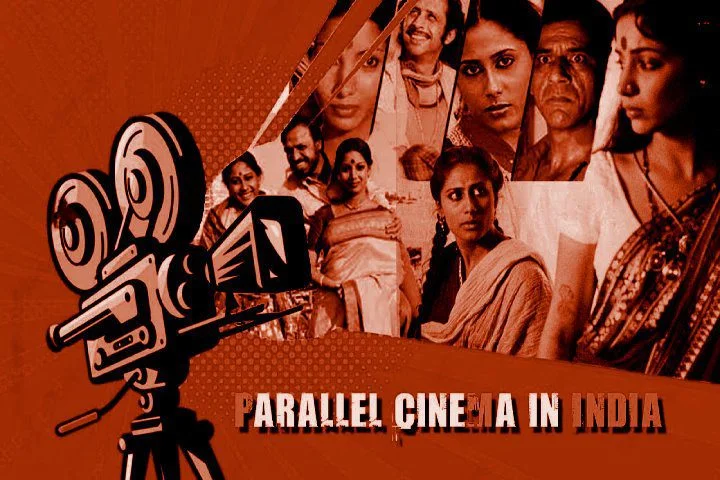
(d) The fourth category comprises the filmmakers who are associated with parallel cinema or New Cinema or the New Cinema Movement. They are also Indian filmmakers by birth, but most of them have been inspired by the cinematic movements of the West and are generally ashamed to be called as Indians. They do not consider themselves to be traditional filmmakers; in their own understanding, they are original filmmakers. They generally make obscure films that are not understood by the general public. A few of their films, as exceptions, become popular due to teamwork but in their interviews, they do not feel proud about their successful films, rather take pride in their unsuccessful films and keep cursing the audience. The public does not feel affiliated to their films. But a certain section of the media prefers these filmmakers and considers them as great filmmakers; even the West considers them to be their own man. On the other hand, the films affiliated with Indianness do not get much support from the media.